

의료 양식

피부 관리 상담 폼
만약 귀하가 피부관리 상담을 한다면 후속 검사 예약을 위해 이 피부관리 예약 폼을 사용할 수 있습니다. 이 얼굴 상담 폼 템플릿은 연락처 정보, 피부관리 목표와 어려움, 고객이 사용하는 피부관리 제품들, 질환 및 알레르기와 같은 건강 정보 수집을 제공합니다. 또한 이 피부 상담 폼 템플릿은 규정들을 포함하고 있으며 그것들이 귀하의 고객들에 의해 수용되도록 합니다. 더 나아가 이 피부관리 고객 상담 폼으로 고객들의 서명도 받을 수 있습니다.
카테고리로 이동:의료 양식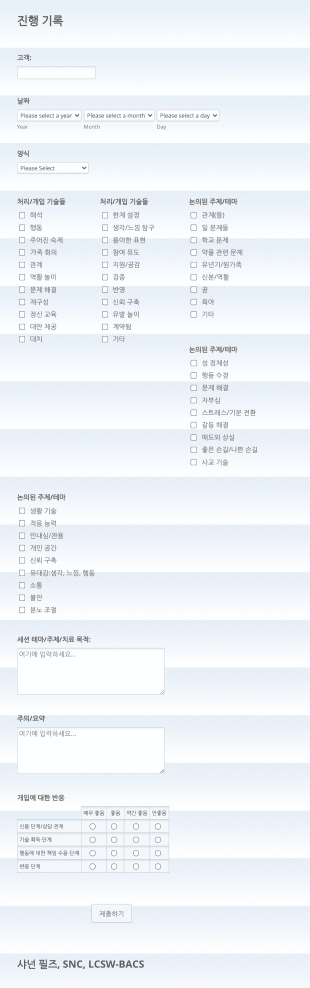
학교 상담 진행 기록
이 폼은 상담사들이 상담 내용을 추적할 수 있는 상담 기록 템플릿입니다. 귀하는 상담인의 이름과 날짜를 입력하거나 드롭다운 리스트에서 양식을 선택할 수 있습니다. 또한, 상담 세션에 대한 추가적인 정보를 입력할 수 있고 논의된 주제들, 치료 내용, 개입 기술 및 상담 내용 요약 및 반응들도 포함할 수 있습니다. 오늘 이 상담 기록 템플릿을 사용하는 것으로 상담 세션을 쉽게 관리할 수 있는 방법을 가지십시오.
카테고리로 이동:의료 양식

시니어 주거 매물 등록서
시니어 주거 시설 등록 양식으로 시설 정보를 온라인으로 접수하고 데이터 수집을 체계화해 주거 정보 플랫폼, 복지기관, 운영사가 상담 및 안내 업무를 더 빠르게 진행할 수 있습니다.
카테고리로 이동:등록 양식
은퇴자 요양시설 목록 제출서
노인주거단지 등록 양식은 지자체, 복지기관, 운영기관이 시설 정보를 온라인으로 수집하고 목록을 최신 상태로 유지하는 데 도움이 되는 Jform 양식 템플릿입니다.
카테고리로 이동:등록 양식의료 양식 정보
Healthcare Forms are digital forms specifically designed to be customized to help meet the complex and varied needs of the healthcare industry. These forms can help with streamlining a multitude of operational tasks such as patient intake, medical history documentation, appointment scheduling, and feedback collection. In real-world scenarios, Healthcare Forms are utilized by hospitals, clinics, and private practices to facilitate efficient patient data management and improve overall service delivery. By digitizing these processes, healthcare providers can focus more on patient care rather than administrative burdens, with the goal of providing a higher standard of service and care continuity.
Jform stands out as the leading online form builder for creating Healthcare Forms. It provides healthcare professionals with tools to customize forms effortlessly, allowing them to tailor specific operational requirements. This customization is complemented by the ability to automate data collection, significantly reducing the time spent on manual data entry. With Jform Tables, data management becomes centralized and streamlined communication across departments. This approach helps healthcare providers maintain accurate and up-to-date records, enhancing both operational efficiency and patient satisfaction.
Why Use Healthcare Forms?
- Healthcare Forms can help reduce manual data-entry errors data collection, which is crucial in the healthcare industry where precision is a matter of patient safety and care quality. Customers can review information from forms to help maintain high standards of data integrity.
- Speed is another significant advantage, as digital forms can be filled out and processed much faster than traditional paper forms. This rapid processing can be helpful for efficient information collection and management.
- Jform offers security features designed to help safeguard data, such as through the use of encryption. These security measures can help with maintaining compliance with regulations such as HIPAA, which governs the protection of patient information.
- Healthcare Forms also enable easy integration with other digital systems, enhancing workflow efficiency. This means that patient data can be seamlessly transferred between systems, which helps with ensuring that healthcare professionals always have access to the most current information.
- The ability to incorporate electronic signatures can help streamline consent and authorization processes, while reducing the need for physical paperwork. This not only helps save time but also helps with documenting and obtaining approvals.
- Customization options allow healthcare providers to tailor forms to specific needs, helping capture relevant information accurately. This flexibility is helpful for adapting to the unique processes of different healthcare organizations.
Common Problems Solved by Healthcare Forms
- One of the most common issues in healthcare is the overwhelming amount of paperwork required for patient intake, billing, and record-keeping. Healthcare Forms can help alleviate this burden by digitizing processes, potentially reducing the need for physical document handling.
- Manual data entry is not only time-consuming but also typically prone to errors. By automating data collection through digital forms, healthcare providers can help reduce these risks, collecting accurate and reliable patient records.
- Lost or misplaced data can lead to critical gaps in patient care. Healthcare Forms help ensure that all data is securely stored and easily accessible, help prevent information from being lost and enable quick retrieval when needed.
- Compliance with healthcare regulations typically requires meticulous record-keeping and data protection. Healthcare Forms help support compliance efforts by providing security measures for data storage and audit trails, which can make it easier to align with regulatory requirements.
- Communication breakdowns between departments may impede patient care. By centralizing data management, Healthcare Forms can facilitate smoother communication and coordination among healthcare teams, helping improve service delivery.
Matching Use Cases to Features
- The Drag-and-Drop Form Builder is designed for creating intake forms, allowing healthcare providers to easily configure forms or adjust fields to help collect essential patient information, which can enhance data collection efficiency.
- Conditional Logic can be applied to Healthcare Forms to streamline complex workflows, such as triage forms, by dynamically configuring questions based on previous answers to collect only relevant information.
- For payment collection, integrating one of the 30+ available payment gateways like Stripe or PayPal helps secure the processing of patient payments, reduce administrative overhead and improve cash flow.
- Electronic Signatures (Jform Sign) are integral for consent forms, allowing patients to sign documents digitally, which can help simplify the process and speed up the approval process for patient care like treatments and procedures.
- The PDF Editor enables the automatic generation of professional PDF documents from form submissions like creating comprehensive patient reports and discharge summaries.
- Using the Report Builder, healthcare providers can generate insightful reports from collected data, which can be used to help in decision-making and the evaluation of patient trends or treatment outcomes.
- Offline Data Collection via Jform Mobile Forms allows healthcare professionals to collect patient data in areas with limited internet access, helping ensure that no data is lost and accessibility to healthcare services.
How to Create a Healthcare Form
- Start by browsing the Template List for a suitable Healthcare template or choose to start from a blank form to build a customized solution from scratch.
- Customize the design and fields using the Drag-and-Drop Form Builder, ensuring that the configuration collects necessary information and the form aligns with your specific workflow requirements.
- Publish and share the form via Direct Link, Email, or Website Embed, making it accessible to authorized individuals like patients and staff, facilitating immediate use and data collection.
Top Use Cases for Healthcare Forms
- For Managers: Healthcare Forms can provide managers with the ability to help oversee and streamline administrative processes. By using digital forms, managers can monitor workflows in real-time, helping manage the overall operational efficiency of the healthcare facility.
- For Teams: Healthcare teams benefit from using Healthcare Forms through configuring forms to help improve coordination and communication. These forms enable seamless data sharing between team members, ensuring authorized individuals can have access to the same up-to-date information. This can help improve collaboration and reduce potential risk of miscommunication.
- For Customers: Patients and their families can experience a more streamlined and user-friendly process when interacting with healthcare providers that configure their digital forms. Online forms can help save time and avoid the hassle of paperwork during visits. This convenience can help improve the patient experience, foster better communication with healthcare providers, and encourage proactive engagement in their own healthcare journeys.
Summarizing Healthcare Forms
Healthcare Forms, configured using Jform's online form builder, can help provide support for the healthcare industry’s challenges with data management and workflow efficiency. By digitizing and automating various processes, these forms can help enhance accuracy, speed, and security in data handling, supporting patient care and streamlined operations. Jform's customizable features and seamless integrations help healthcare providers configure forms to meet their needs.
자주하는 질문들
1) Is it free to create Healthcare Forms on Jform?
Yes, Jform offers a free plan that allows users to create and use Healthcare Forms. However, there are also paid plans that provide additional features and higher usage limits for more demanding needs.
2. IT 양식은 조직에 왜 중요한가요?
예. Jform은 암호화와 HIPAA 같은 업계 표준 준수 조치를 통해 데이터 보안을 중요하게 관리합니다. 이를 통해 제출된 모든 데이터를 안전하고 기밀로 보호할 수 있습니다.
3) Do I need coding knowledge to build a Healthcare Form?
No, Jform's Drag-and-Drop Form Builder is designed to be user-friendly, requiring no coding knowledge. This allows anyone to create fully functional Healthcare Forms with ease.
4. IT 양식에는 다양한 유형이 있나요?
예. Jform은 Stripe와 PayPal을 포함한 30개 이상의 결제 게이트웨이와의 연동을 지원하므로 의료 양식을 통해 직접 결제를 받을 수 있습니다.
5. 누가 IT 양식을 사용해야 하나요?
예. Jform으로 제작한 양식은 모바일 반응형으로 제공되며 모든 모바일 기기에서 접속하고 작성할 수 있습니다. 이를 통해 의료 서비스 제공자와 환자 모두 편리하게 이용할 수 있습니다.
6. IT 양식은 워크플로우 효율성을 어떻게 향상시키나요?
예. Jform PDF 편집기를 사용하면 양식 제출 내용을 전문적인 형식의 PDF 문서로 자동 변환할 수 있습니다. 생성된 문서는 기록 보관이나 보고에 활용할 수 있습니다.
7) How can Healthcare Forms help with compliance?
Healthcare Forms facilitate compliance by providing secure data storage and audit trails, making it easier to adhere to healthcare regulations and maintain accurate records.
8) Can Healthcare Forms improve patient engagement?
Yes, by offering a convenient and efficient means of communication and data collection, Healthcare Forms can enhance patient engagement and satisfaction, leading to better health outcomes.