Future Formed Episode 1:
Chase Harmer, Wishes.Inc 설립자와 함께하는 기부자 신뢰 구축
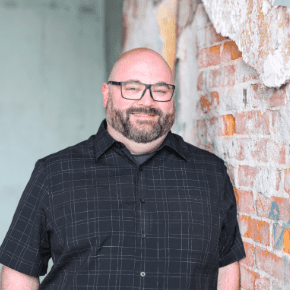
호스트
Erik Fisher
생산성 팟캐스터



에피소드 소개
Future Formed의 첫 번째 에피소드에서 진행자 Erik Fisher는 전례 없는 투명성과 혁신을 통해 자선 기부 방식을 변화시키고 있는 플랫폼 Wishes.Inc의 설립자 Chase Harmer와 인터뷰합니다. 기부자의 참여를 지속적으로 이끌어내도록 설계된 현대적인 모금 솔루션을 만나보세요.
Everything in the nonprofit generates from the donor, the donation. The donor has zero control over anything, how you spend that money, how you receive that money, what you do with that money. If you're a good nonprofit or not, they know nothing. They see nothing, they hear nothing. That's part of the problem. Re-engage somebody that hears nothing, sees nothing, does nothing. That's hard. Re-engage, go get more money from a donor. When you actually can show that, that changes the game for you. I think that's really why we're a huge benefit to a nonprofit that's doing things the right way. If you have nothing to hide, then we shouldn't have any issue using a platform like ours.
This is Futureformed where we explore how nonprofits are driving efficiency and innovation to make a greater impact. I'm your host, Eric Fischer, and this show is presented by Jot Form Enterprise, the leading web form building platform for nonprofit organizations worldwide. With response data securely stored online, you can create beautiful customized forms that meet your needs. Stick around until the end of the episode to find out how your nonprofit can access an exclusive discount with Jot Form Enterprise. Now, let's dive in. Today, we're excited to be joined by Chase Harmer, the founder of Wishes, Inc., a platform that is redefining charitable giving through transparency and innovation. With over 30 years in payments, Chase is a fintech visionary blending technology and community-driven support to make giving more impactful and accountable. At Wishes, Inc., Chase has introduced features like virtual credit cards, cashback rewards, and real-time impact tracking, setting new standards for trust and efficiency in the nonprofit sector. Chase, welcome to the show. We're thrilled to have you with us today.
Hey, thanks, Eric. I'm glad to be here and happy to talk about Wishes and all the things we do.
Now, obviously, I just said a mouthful about all that you've done and all that you're doing, but go ahead and tell us a bit about yourself and your background and the experiences that shaped this journey that led you to where you are today.
I've been in payments for a long time, pretty much my whole entire adult life. Back in the '90s, when cell phones weren't existent and half of America didn't take credit cards, which is impossible to fathom these days, credit cards were like, what credit cards? I kind of worked my way up through the ranks in the processing business. Then I became fascinated with the idea of the supply chain in the business, how it worked in the business world. Back in 2011 or so, we were doing things consumers don't know about, like how a lot of these third-party travel agency booking sites work, like Expedia or Booking.com. The supply chain really goes from a consumer to the third-party booking engine, which makes the reservation in real time using a virtual credit card to pay the supplier. I thought if I could be the front side and the back side of that transaction, I could solve a lot of problems and arbitrage some of the bank interchange fees created on every transaction.
More along the lines of the supply chain and solving problems, we started doing that back in 2011 and 2012, before Apple Pay introduced virtual credit cards in 2019 or 2020. Back then, virtual credit cards were used for banking in third-party booking engines. When I was at Safeway, every grocery store in America asked for a roundup donation. I wondered where that money actually went and who the kids being helped were. As a problem solver, I realized a donor and a donation is a supply chain. You have a donor making a donation to a charity or cause to help something. People are motivated to help a thing, not necessarily a specific organization. For example, there's a fire in California, and people want to help that fire and the people there. We're emotionally tied to stories but can't see the outcomes. As donors, you never actually see the outcomes. If you can't see the outcomes but donate for a reason, what's missing is the connection. There's no connection because you give to a pot, and the nonprofit can't say, 'Look what we did with your money.' That's the connection nonprofits struggle to convey to donors. They can't re-engage donors with a message of impact; instead, the second call is just asking for another donation. It's easier to ask for money when you can show what you did with the previous donation. But today, that's not how it works. Nonprofits aren't technology firms; they were designed to help a cause, not to manage technology.
Our system creates cards to be used in real time, creating transparency. We're connected to about 80,000 retailers and make revenue when dollars are spent. We solve the transparency and revenue problems and share that revenue with nonprofits and donors alike, so they can earn revenue on the spend generated and understand what's happening with the money. Transparency was the macro problem we aimed to solve, and we created a unique model benefiting our organization when dollars are allocated, sharing revenue with nonprofits. That transparency fixes communication and connection problems.
How would you say your previous experiences in payments, fintech, and your issued patents influenced these innovative solutions that Wishes Inc. is bringing to donors and nonprofits?
100%. It's one thing to have an idea, but there aren't many fintechs specializing in outgoing expense management. Expense management is controlled by a few companies in the virtual credit card space, designed for businesses, not nonprofits. We were built specifically for this use case. We earmark funds, so when a fundraiser comes on the platform, there's a reason for the money. Nonprofits have mission-related expenses like buildings and people. Donors can choose where their dollars go. If you understand the nonprofit, you appreciate the cost to run the business and can donate to the pot that allows those dollars to go to their bank account, earmarked for operational costs. The impact button allocates funds to specific needs, like food for a food bank, which can only be spent through suppliers like grocery stores or restaurants. They can't be used for unrelated shopping. The biggest problem with crowdfunding platforms is once money goes to the bank, it's gone with no insight. Donors have no trust once funds are allocated because nonprofits have full control and can do whatever they want. Programs like No Good Deeds show how funds can be misused, but our platform eradicates that fraud. I had built a fintech that did this and understood what it takes to make it real.
Are there other ways Wishes Inc. helps nonprofits build stronger relationships with donors while simplifying the donation process?
Very simply, nonprofits pick categories they need funds for, and those funds are automatically deposited into cards earmarked for those categories. Donors can see real-time reports or monthly summaries and send messages to their donor list. There's nothing like this because you can't show a donor what they did with their $20 or $100 otherwise. It's like using your credit card at a grocery store and seeing exactly what you bought. The card issuer gives you that insight. How engaging you want to be with your audience is up to you. You can give donors real-time reports, which is insane and far-fetched today. People talk about real-time transparency with cryptocurrency, but nobody uses it. It's like a hybrid car; it's useless without charging stations. Everyone still uses gas cars, which are credit cards. We all use credit cards on our phones and get alerts in real time. We're not changing user behavior, which is the biggest thing. It's exactly how you would have done it anyway, so there's no change, making it easier to adopt.
Speaking of credit cards, anyone who's seen an ad has heard the term cashback. Wishes Inc. allows users to bank cashback for charity through everyday activities like shopping. How does that work?
We became a publisher, which means we connect to big box retailers like Home Depot, CVS, Macy's, Amazon, and more. When donors start the process inside the app, they see how much cashback they can make at different places. We cover 76,000 retailers, so most places people shop are included. Cashback can be up to 10% depending on where you shop. We have a patented double cashback feature. For example, if you have a 2% cashback card like Wells Fargo or Chase Sapphire and fund your Wishes wallet with that amount, you get your 2% on the initial contribution. Then you can spend those dollars from the wallet wherever you want online and get another 1.5% cashback on the Wishes card. You can bank up to 4% cashback, which sits in your wallet and can be allocated to charity anytime within the same calendar year, with tax credits for that year.
Everything I've heard sounds unique. How does Wishes Inc. provide nonprofits with better insights and tracking to maximize fundraising efficiency differently from other platforms?
We're not trying to be all things. When you try to be all things, you suck at all of them. We track spending habits because we're a card issuer and gather data to supply better information to nonprofits and their user base. If a nonprofit's donors use our infrastructure, we gain insights and share that data with nonprofits so they can better reach out to donors with ammunition to talk to them. This information is highly unattainable because payment companies have all the data but don't share it. Mastercard, for example, knows you spent $1,000 at Amazon but not what you bought. We grab that data, store it in user profiles to understand behavior and purchase patterns, and share it with nonprofits. Nonprofits own their data; we don't hoard it like other platforms. We're here to serve nonprofits and help create change through their impact. Some bad apples exist, but our platform weeds them out. No valid nonprofit would want to use our platform if they intended to defraud donors. Hurricanes in Florida saw a billion dollars in fraud, which is insane. Our platform can eradicate that fraud, making it impossible to raise money fraudulently. Donors want to understand their dollars go to the right place, which is hard to establish trust with skeptical donors. We want donors to feel comfortable knowing their dollars always serve what they intended.
Transparency seals are often used in the nonprofit sector to signify accountability, but Wishes Inc. integrates them uniquely with a 97 to 3 impact to overhead ratio. How do tiered plans and transparency seals empower nonprofits to maintain trust and accountability, setting Wishes Inc. apart from traditional certifications?
Certifications are useless if an accounting firm audits a year in advance. They show transparency looking backward, which isn't real-time transparency. Transparency must be real-time. On Wishes, you can raise funds for free through cards only, serving people who need help. Fake profiles exist, but we earmark funds and use credit cards only to prevent misuse. Paid plans allow nonprofits to raise money for their mission directly to their bank. Fundraising starts with telling users how you'll use the money and what you need it for. Donors want to know where dollars go, like to a fire or a hurricane. Traditional charities pool money in a big pot, but on Wishes, you can earmark funds for specific causes and collect money for your charity without disclosing details if donors trust you. Nonprofits are businesses that must operate efficiently with real costs. Some fail because they don't run like businesses, mismanaging funds despite great hearts. Transparency starts when raising money, not after. Explaining operational costs helps donors understand and donate to those buckets. Additional features like invoicing are available depending on plan level. Donors are aware of spending before funds are spent, which is their choice.
Everything in the nonprofit generates from the donor, the donation. The donor has zero control over how you spend, receive, or use that money. They know nothing, see nothing, hear nothing. That's part of the problem. Re-engage somebody that hears, sees, and does nothing. That's hard. Re-engage, get more money from a donor. When you can show that, it changes the game. That's why we're a huge benefit to nonprofits doing things the right way. If you have nothing to hide, you shouldn't have any issue using a platform like ours.
What advice would you give nonprofits looking to embrace digital transformation, and how does Wishes Inc. help them adapt?
We're plug-and-play. Our platform can be white-labeled. With our top-tier plan, you can use Wishes under your own brand, instantly having technology in your nonprofit by having a paid plan. You can make it look and feel like yours. This makes it simple for nonprofits to have technology, whereas today, technology is controlled by two big firms in the nonprofit space, which are old, similar, challenging, and expensive. Salesforce is good but integrating with it costs $150,000, so only massive nonprofits use it. Our platform is plug-and-play for any nonprofit, big or small, with no integration or setup fees. Paid plans start at a dollar with the first 90 days for a dollar. We aim to do enough to make you want to stay.
Building on cashback rewards, virtual credit cards, and exclusive discounts, how have these features impacted nonprofits using Wishes Inc.?
We don't have enough test data yet because we just opened it up. We'll be on iOS next week. We're doing a big move in Los Angeles, pushing a few hundred thousand through the platform in the first few days. We're excited about the potential. There's nothing else like it in the market, so no comparison data. Connecting donors to actual impact gains loyalty and more donors. Understanding real metrics behind dollars is a huge game-changer for nonprofits trying to raise funds. The data will speak for itself. We should do a follow-up. So far, so good with great traction and big projects lined up. Unfortunately, LA is at a bad time but also a critical juncture for our platform to step in and make a difference. We're excited to help the people of LA.
You mentioned crypto earlier. Tell us about the cryptocurrency Wishescoin and how it enables donors to support causes instantly and reshape nonprofits receiving and utilizing donations.
Wishes Coin is a tap game allowing donors to tap and rack up currency to donate. Every tap mines currency for us. More active tappers generate more currency, which we give back to users to donate wherever they want. Being on blockchain allows instant worldwide money transfers. Our card program works in the US and Canada, but blockchain enables sending dollars instantly to places like Africa or Vietnam. Outside the US, everything is done on cell phones, with no dollars but phone payments. We want an easy way for people to rack up currency. Users create coins by tapping, which can be allocated for future use.
How do you envision nonprofit plans evolving? What additional tools or features are in development?
When you build something, you realize what's missing or needed. We're asking for feedback from nonprofits and users to know what they want and need. We take the best ideas and try to implement the most useful features for nonprofits. We're a bunch of young, young-at-heart people ready to create change. We're open to all considerations to make the platform more useful for everyone.
Looking ahead, what are your goals for Wishes Inc. in the next five years, and how do you plan to continue supporting nonprofits in achieving their missions?
We're starting on the right track. Our vision is to touch a billion lives positively through nonprofits, donors, and people supporting causes. Our revenue is based on expenditure of funds. We want to help nonprofits get money fast and spend it where needed instantly. We brought stores to the platform to deploy dollars exactly where needed. Our goal and ambition are high, with lots of room to grow. Five years is hopefully enough. There are about eight billion people on earth, so a billion is a big ask. Hopefully, we reach millions soon and take it from there.
It's been great talking with you today on Futureformed about Wishes Inc. Thank you for sharing your insights and the incredible work you're doing to transform charitable giving.
I appreciate your time. If you're not a user yet, it's easy and free to sign up. We'd love to see you in there. Thanks so much for your help.
As mentioned at the beginning, we have a special offer for nonprofits. You can apply to receive a 30% discount with Jot Form Enterprise. Visit jotform.com/enterprise/nonprofit to get started and see how Jform can support your mission. Thank you for tuning in. Don't forget to subscribe, share, and stay connected for more stories of innovation and impact in the nonprofit world. Until next time, I'm Eric Fischer and this has been Futureformed.